

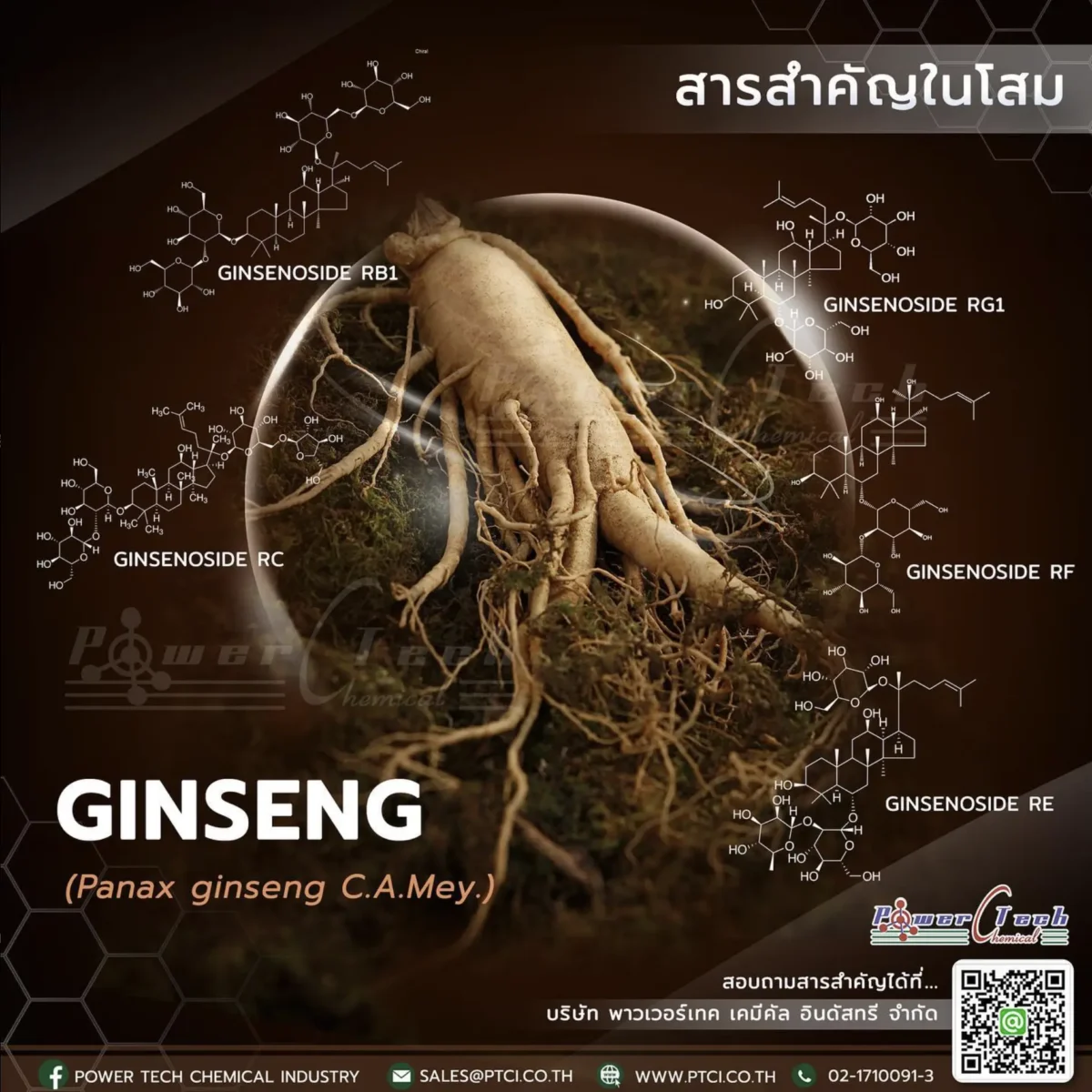
- Primary Active Components: Ginsenosides are considered the main pharmacologically active ingredients responsible for most of ginseng’s purported health benefits. Over 100 different ginsenosides have been identified.
- Diverse Effects: Different ginsenosides exhibit a wide range of biological activities, which may contribute to ginseng’s various traditional uses. These potential effects include:
- Neuroprotective effects
- Anti-cancer activities
- Anti-inflammatory properties
- Antioxidant effects
- Immunomodulatory functions
- Potential benefits for cognitive function, including memory and mood
- Possible effects on blood sugar and cholesterol levels
- Classification: Ginsenosides are often classified into two main groups based on their chemical structure:
- Protopanaxadiols (PPD): Examples include Rb1, Rb2, Rc, Rd, Rg3, and Rh2. Some of these have shown depressant activity on the central nervous system.
- Protopanaxatriols (PPT): Examples include Re, Rf, Rg1, and Rg2. Rg1, for instance, has shown stimulant activity on the central nervous system.
- Abundance: Certain ginsenosides like Rb1, Rb2, Rc, Rd, Re, Rf, and Rg1 are more abundant in ginseng roots and are thus more frequently studied.
- Transformation: The composition of ginsenosides can change depending on how ginseng is processed (e.g., steaming to produce red ginseng). This process can increase the concentration of certain ginsenosides like Rg3. Gut bacteria can also metabolize ginsenosides into different forms.
While ginsenosides are the most well-known and studied active substances, ginseng also contains other compounds that may contribute to its overall effects, including:
- Polysaccharides: Which may have immunomodulatory effects.
- Peptides and amino acids.
- Vitamins and minerals.
- Ginseng oils and phytosterols.