

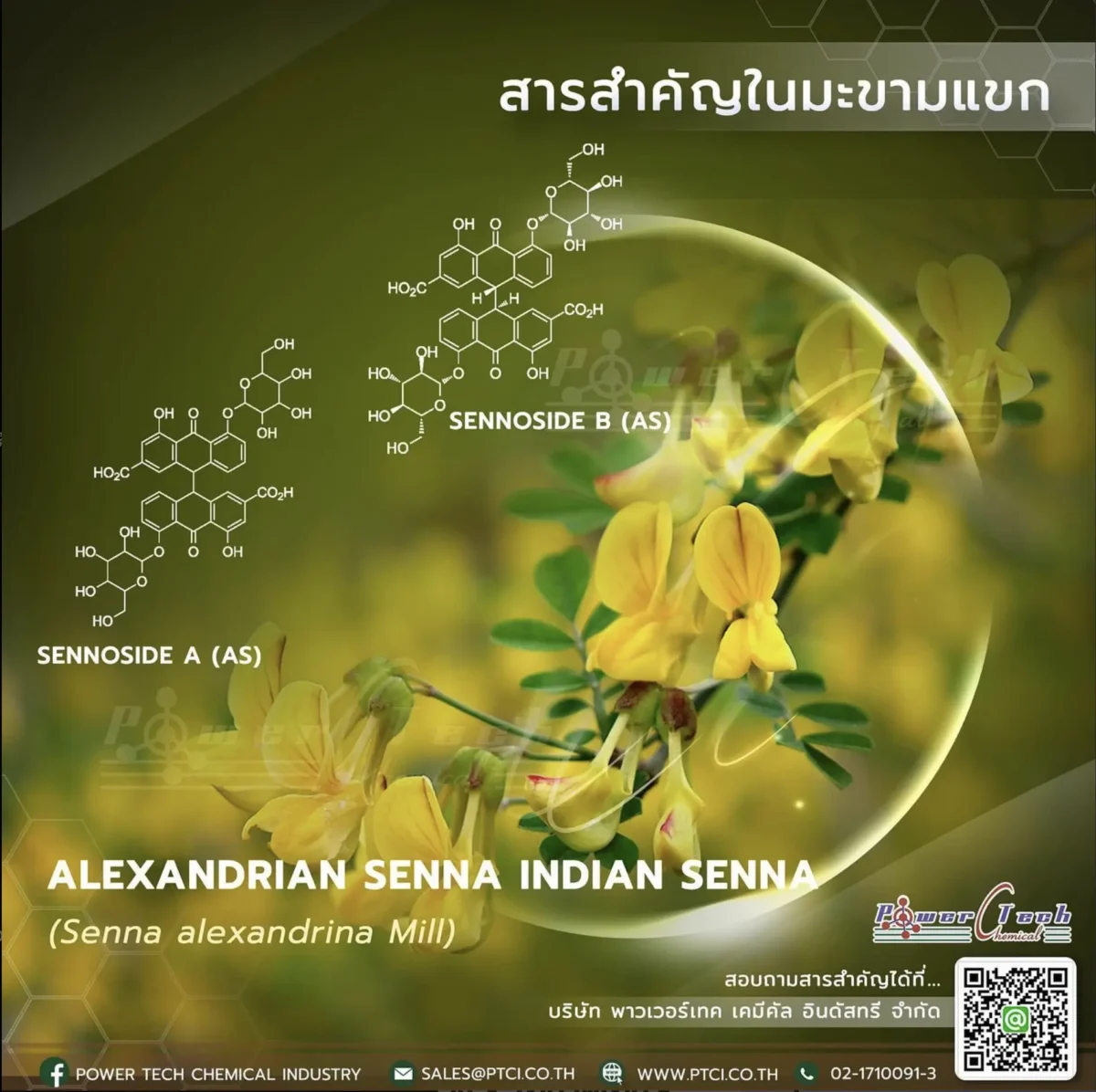
The most important substances in senna that contribute to its well-known laxative effects are a group of compounds called anthraquinone glycosides, particularly sennosides A and B.
Here’s why these are significant:
- Stimulant Laxative Action: Sennosides work by irritating the lining of the bowel, which increases the muscle contractions (peristalsis) in the large intestine. This helps to move the stool along and promotes bowel evacuation.
- Reduced Water Absorption: Sennosides also affect the absorption of water and electrolytes in the large intestine, leading to an increase in the water content of the stool, softening it and making it easier to pass.
- Standardization: Senna leaf and pod preparations are often standardized based on their sennoside B content to ensure consistent potency.
While sennosides A and B are considered the primary active components, senna also contains other anthraquinone glycosides like sennosides C and D, as well as free anthraquinones such as rhein and aloe-emodin, which may contribute to its overall effects.
Additionally, senna leaves contain other substances like:
- Flavonoids: Such as kaempferol and isorhamnetin, which may have antioxidant properties.
- Mucilage: Which can contribute to the softening of stool.
- Tannins: Which may have astringent properties.
- Mineral salts: Including calcium.